
 Photos: Courtesy of brand; Getty ImagesSave this storySave this story
There's a shift happening online. My social feeds have always been filled with Black women doing their hair; sharing the best mousses for a twist-out, the scalp sprays they use between braiding appointments, and whatever hair growth miracle is doing the rounds. But lately, the products being raved about have been different compared to the last two decades of recommendations. Black women are posting about "life-changing" results they’ve gotten from brands I wouldn’t usually associate with being the best option for our hair type.
In one video, creator Deborah Wanjala advocates for the viral Abbey Yung hair method, displaying her years-in-the-making product arsenal packed with Amika, Living Proof, K18, and Redken alongside drugstore brands like Dove and Pantene. @not3shaunie also endorses Yung—a white creator with long, straight hair who continues to go viral for her guides to reversing hair damage—despite getting backlash for citing a creator who doesn’t look like her. Shaunie has multiple videos explaining how heavier curl creams and custards “sit on top of” her fine, low-density hair, causing it to “look lifeless and even thinner” compared to lighter serums like the ones Yung recommends. “I HATE how good these products work,” begins one caption of a photo with Redken and Ouai products in the r/Naturalhair subreddit. There are over 600 upvotes on the post, and the majority of comments are in agreement.
It’s not just my algorithm. Type “Black hair” or “curly hair” plus just about any salon brand into TikTok, Reddit, or YouTube, and you’ll be met with countless testimonies about how Redken, Amika, Matrix, Olaplex, and K18 have transformed someone’s textured strands. It’s a conversation that’s been resurfacing steadily in the past year within my own work and social circles. Many women I’ve spoken to are mixing and matching brands to build multiple ideal product lineups they can deploy depending on their styling needs for that week. “When my hair needs real care and nourishment, I opt for Cécred, plus beauty shop staple Silicon Mix,” Natalie Tuffuoh, a straight natural working in fashion, tells me. “But when I need a sleek blowout that’s guaranteed to last, I will always reach for an Amika, Kenra, or IGK product—and Cécred again.” She’s also a fan of ColorWow’s Extra-Strength Dreamcoat for maintaining straight styles between washdays.
And although it’s mostly straight naturals lauding the Amikas of the world, some curly and coily girls who wear their hair natural have been incorporating more of these types of brands into their wash ’n' go, twist-out, and diffusing routines. “Once I started treating my hair like it’s hair—and not like it’s curly—my hair started growing,” testifies Amsterdam-based creator @5sabrine in a video about why she stopped using products that are “only made for curly hair.” It’s just one in her ongoing series of “fine, curly hair routine” videos, which has racked up over a million views.
The last two to three years have seen countless creators document their discovery that hair density and thickness can matter just as much as texture when it comes to finding products that work for them. One is creator @yapahcurls, who labels herself as “your fine hair bestie.” She advocates for a wider understanding that fine-haired naturals can’t always follow the advice of those with thicker, denser hair like Whitney White (aka @naptural85), arguably the biggest hair influencer in the history of the natural hair movement. Yapah Curls’s product recommendation videos include a mix of brands primarily marketed toward Black customers, like The Doux, and offerings from Eva NYC, Garnier, and L’Oréal Paris. Yar Sudani, a hugely popular natural hair influencer with over 2.4M followers across TikTok, Instagram, and YouTube, also uses a mixture of brands in her popular Wash Day Diary series. Sometimes it’s mostly salon brands—like Olaplex, K18, Bumble and Bumble, and Innersense—but other times she’ll do a routine filled with products from Black-focused brands, like Pattern Beauty, Mizani, and Carol’s Daughter.
So why are women with natural hair shifting their routines toward so-called mainstream brands after years of advocating for brands custom-made for Black hair? The general perception (fair or not) is that the brands that have historically marketed toward Black consumers are typically more “natural” and offer top-notch moisturization; these other brands provide formulas that yield salon-quality results at home. It makes sense that the latter category is often reserved for styles that involve heat, like silk presses, blowouts, or diffuser-dried curls, but these brands are also making an appearance in air-dried styles on mostly fine coils, curls, and waves that might need lighter formulas.
The Birth of Products for Black Hair
From its inception around the turn of the 20th century, commercial Black hair care has been a response to the lack of options on mainstream beauty shelves. For much of that history, many of the products were focused on getting coily hair straighter and keeping it that way for longer. But more recently, the message was all about being au naturale—and that included the formulas.
“Black-tailored brands took a natural approach for much of the past two decades, focusing on using natural oils and butters and sulfate- or silicone-free products in contrast to the Black-focused brands of the 20th century, like Lustre Pink or Soft Sheen,” says cosmetic scientist Javon Ford. Cosmetic scientist AJ Addae of Sula Labs agrees. “This focus on claims around being clean and botanical-based was the result of mistrust around chemicals,” she says, pointing to moments throughout history where the medical and cosmetics industries have used Black patients as unwitting test subjects. Retin-A, for example, was invented after a doctor conducted dermatological experiments on Holmesburg Prison inmates, most of whom were Black men. In the last two decades, the public has become more widely aware of the risks of traditional lye-based relaxers, like scalp burns, carcinogen absorption, and exposure to endocrine-disrupting chemicals linked to a doubled rate of reproductive cancers and fibroids—which already disproportionately affect Black women.
Around the same time, sulfates and silicones, two synthetic ingredients, fell rapidly out of favor across hair types as they garnered bad reputations for stripping the hair and causing build-up, respectively. Black beauty consumers started going back to the natural ingredients their grandmothers might have used, Addae says. Alternatives like cleansing apple cider vinegar, mayo hair masks, and plant-based oils started rising in popularity, both as DIY remedies and ingredients brands marketed toward Black hair would advertise.
A New Interest in Customers With Curly Hair
That natural messaging worked for a long time—and still does, for some consumers. But then, the clean movement at large hit a few mold-covered stumbling blocks. Around the same time, the general public started to get more comfortable openly criticizing hair brands that didn’t sell products that worked for all hair types and textures. In some cases, this meant massive beauty conglomerates like Unilever and Procter & Gamble acquired the most successful natural-focused, often Black-owned indie brands. In other cases (or, often, in tandem), mainstream brands with budgets beyond the wildest dreams of the indies were pouring cash into R&D for curl-focused products for the first time.
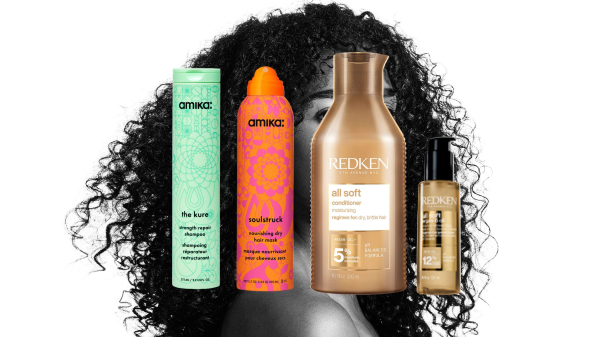
In 2024, 10 years after the brand first launched, Olaplex came out with its Bond Shaping Technology line made specifically for curly hair types. Amika launched its Power Hour Curl Refreshing Hair Spray in 2021, bringing its curl-specific line up to three SKUs. The brand's Hydro Rush line (launched in 2023) gets lots of love from natural hair influencers for fulfilling their hair’s hydration needs without weighing it down. The Hydro Rush products are often used in tandem with Amika’s repairing The Kure collection. When K18 launched in 2020 with a shiny, new, patented technology to compete with Olaplex, it amplified the appetite for bond repair without explicitly saying which hair type its products catered to. Most of the brand’s launch campaigns have featured a range of straight, wavy, curly, and coily types; in 2024, its AirWash Dry Shampoo launch campaign included a model with braids.
Now, Black women suddenly have more product options, and the fine, curly hair set realized that these brands with decades of experience prioritizing their white counterparts might actually have formulas that were better suited for their hair texture. Independently, many people who had tried embracing their natural texture felt empowered to go back to wearing straight styles at least some of the time. Both groups seem to be driving this rediscovered enthusiasm for salon brands.
The Bond Repair of It All
These larger, better-funded brands are also generally able to move faster when it comes to developing and releasing new technology, including those that have a lot of benefits for curly and coily textures. Take bond repair, which came up over and over in interviews for this story. Since Olaplex started selling a version of its in-salon bond-repair treatment directly to consumers in 2018, the ubiquity of bond repair has been steadily climbing to the point where even those without hair damage think it’s a routine imperative. The impact of this technology on my damaged textured hair was my first introduction to using a brand that wasn’t necessarily marketed toward my hair type or even tighter textures at that time, even though it’s a category of product that we could especially benefit from.
“Curly and coily hair types have a more complex structure that affects how the fiber responds to tension,” hairstylist and Olaplex ambassador Naeemah LaFond explains. “The bends and coils create uneven stress distribution along the strand, which can make the hair more susceptible to breakage and moisture loss without proper care. When the disulfide bonds that hold the hair fibers together are disrupted through chemical services or repeated heat styling, the hair’s resilience can be noticeably diminished.” This is validated by cosmetic chemist Addae: “These are the exact chemical interactions that we have to take into consideration when formulating for textured hair,” she explains.
As of this writing, I could find only three bond repair ranges from brands that prioritize curly and coily hair: Shea Moisture, Curlsmith (Bond Rehab), and Black-owned and -founded As I Am, which has an affordable six-product Bond Repair lineup that often gets overlooked in bond technology round-ups. “It was only a matter of time before many Black women decided to give general hair products a try to address their specific needs,” Ford says.
Sulfates and Silicones Are Back on Everyone's Good Side
While certainly not brand-new innovations, sulfates and silicones are having their own comeback moment—and many so-called mainstream hair brands never fully abandoned them in the first place.
“Sulfates are fantastic cleansing ingredients and can be easily made into gentle and hydrating shampoos,” explains cosmetic chemist Julian Sass. Black women are reporting stronger strands that move with more spring and lightness, plus less build-up and subsequent breakage, when they stop using natural oils and greases as stylers or moisture sealers in favor of silicone-based serums and gloss treatments. “Silicones get a bad reputation for buildup, but at the right concentrations they provide slip, reduce friction, and make detangling significantly easier, which is a health benefit for tightly coiled textures,” says Addae. “Ultimately, understand your hair's needs rather than following a blanket rule about ingredients. If you're leaving out silicones and sulfates but not properly following a healthy hair and scalp styling routine, then you don't win at all.”
It makes sense that Black women are particularly invested in finding formulas that provide professional-grade results at home. We’ve often had to become hair scholars and do our own research when brands haven’t seemed interested in making products for our hair texture. In today’s post-natural hair movement landscape (or, as some would argue, the age of a new natural hair movement), there are more variations than ever on what it means to have Black hair. Straight hair naturals, wash ’n' go warriors, heat-trained hair, those who have returned to relaxer (as long as it’s lye-free, or a smoothing treatment alternative), it seems that every camp has its newfound holy grails colliding at a point in time where we’ve reached peak beauty creation and consumption.
And yes, there are Black hair-care brands launching exciting new technology too, Ford is quick to clarify. “Innovation happens on both sides,” he says. “Carol’s Daughter released a minoxidil hair serum a while ago. It’s the first Black brand I know of to do that while the others all have natural oil-focused hair growth oils.”
Jay-Ann Lopez, a member of the gaming industry who experiments with her hair in daily life and for social content, is okay with that corner of the industry moving a little more slowly. “The fact that Black brands haven’t been at the forefront of certain technologies might be a good thing,” she says. “Now, they can study other brands to strengthen their position in the market, then bring cultural and social capital to the sector—something Cécred is already doing so well.”
The Brands Working Harder Behind the Scenes
Black customers spend billions on hair care every year. And yet, the effect of our spending tends to just create ripples in representation when it ought to move mountains. However, all of the evidence above does seem to show that brands may finally be listening, especially those that have put Black women at the helm.
Recent appointments of prominent Black and mixed race hair professionals to key roles at brands have signaled some change at more of a visible topline level. The fashion industry's favorite hairstylist, Jawara, who was previously global ambassador for Dyson Beauty (which has continued to release new attachments for its cult Airwrap, making it compatible with 19 hair types, plus a dedicated Airwrap Coanda 2X for curls and coils), is now global creative director at L’Oréal Professionnel (which, in addition to launching more curl-focused products, has initiatives focused on equipping stylists at L’Oréal partner salons with specialized technical training for working with hair of all curl types), a role also held at the brand by hairstylist Cyndia Harvey. On the formulation side, Amika appointed chemist Cicely Shillingford, PhD, as assistant vice president of product development, innovation, and regulatory, 18 months after she joined the brand as director of product development in 2023. There’s also LaFond, who was the national education manager and global artistic director at Amika from 2013 to 2023 before becoming the global brand ambassador for both Olaplex and Shark Beauty.
“Amika was a young, ambitious brand willing to be challenged, and I’m proud to have helped write that into its DNA,” LaFond tells Allure (Amika launched in 2007, six years before LaFond joined). “We were practicing inclusion years before it became an industry talking point, and that wasn’t an accident or a rebrand; it was structural.” She recalls having “real decision-making power,” including the ability to push back on marketing or a casting choice before products hit shelves.
She feels her role at Olaplex is similarly impactful. “At Olaplex, I’m being pulled into formulation conversations directly with scientists, not consulted after the fact but present while the science is still being decided,” LaFond says. “It’s the kind of access most brands don’t extend to artists at all. It’s a model the rest of the industry should be paying attention to, and what both experiences taught me is that inclusion is a chain, not a single decision. It starts in the lab, but it has to survive contact with marketing, with casting, with the words on the packaging. Break that chain anywhere, and the whole promise collapses.”
Many of the brands that Black customers are flocking back to seem to be actively working on representation within the cogs of education, marketing, product development, and research, rather than relying on model diversity and celebrity spokespeople to merely signal diversity—a common practice at the beginning of the natural hair movement. K18 conducts research programs to study the biology of curls and coils, analyzing factors like fragility and moisture retention. L’Oréal, the parent company of Redken and Kérastase, developed a curl classification system from a study across 22 countries, studying curl radius, shrinkage ratio, and the number of twists on a hair fiber. The company used this to develop Redken’s Acidic Bonding Curls line in 2024. The original Acidic Bonding Concentrate line, which included a mask and leave-in and pre-shampoo treatments, went viral several times over for repairing heat and chemical damage in textured hair. However, the All Soft range, which has been around since 2003, is arguably the collection that switched many Black women over to experimenting with salon-grade products. The brand launched an All Soft Curls range in 2023, and both lines appear to be about equal in popularity among this demographic.
Some of the brand representatives I spoke with confirmed the companies they work for are swerving away from “segmentation” and toward the “for multiple hair types” track. “Rather than creating one-off initiatives, the focus has been on making sure textured hair is consistently represented,” explains Nilofer Vahora, Amika’s chief marketing officer. “The goal has always been to build a brand where textured hair is part of the foundation, not an afterthought or a segment.” Amika serves as an interesting case study, launching ranges for different hair types from the moment of its initial launch, rather than adding an Afro or curly line retroactively. Amika, originally a styling-tool brand, first expanded into hair care with what went on to become the Soulfood Nourishing Mask, a leave-in cream for coily hair and other types, an oil treatment, heat protectant cream, plus general shampoo and conditioner. The brand’s universal approach has paid off big time in terms of marketing and brand image. Amika tells me that it over-indexes with coily hair consumers at 1.9 times the category average and 1.4 times with Black hair professionals.
“As a curly natural and mixed race individual myself, I fundamentally understand the unique biology and structure of textured hair, as well as what the hair needs for protection, styling, and care,” Dr. Shillingford tells me. In her role at Amika, she ensures product development is based on the differing needs of different hair types—both what’s considered scientific fact and what consumers are telling her they need.
How to Keep a Balance Moving Forward
In 2026, putting products into two categories—“Black hair care” and “non-Black hair care”—just sounds outdated. “The separation has made a lot of people assume that only someone of color can use a Black hair-care product and only someone who's not of color can use a white hair-care product,” says Brandy Welch, a pharmacist who creates educational hair content. “I think people can actually benefit on both sides if we didn't have such firm distinctions between what's Black hair care and what's not Black hair care.”
As more Black women are buying brands made for their texture, rather than for their ethnicity, they are, in fact, seeing benefits—myself included. While we’re all excited to have found unexpected products that work for our hair, some people are wary that this conversation could spell bad news for Black-owned brands, which are already dealing with a decline in sales and investments.
The ideal sentiment moving forward is clear: Stay open-minded across categories while understanding how best to support not only brands made for natural hair, but also Black-owned brands, now more than ever before. “Our hair-care products can be highly effective for various ethnic groups, and such customers may overlook the opportunity to try the amazing hair-care products that Black-owned brands can develop,” Addae says. Funding for operations and research has always been harder for Black-owned brands: In 2024, these companies received only up to 0.4% of total US venture capital dollars. “We live under a prejudiced system, and this unfair phenomenon largely impacts them in a unique way," Addae says, suggesting that retailers should also reconsider how their aisles are organized. “Retailers, for example, can improve on supporting Black-owned hair-care brands and communicate their strengths to broad audiences. The global beauty industry does this really well, for example, with Korean beauty.”
Ultimately, when it comes to certain product categories—deep-conditioning treatments, moisturizing leave-ins, and styling heroes like gels and mousse—Black hair care has it covered. “On the other hand, I think there is a lot of value and power in growing the market share of products specifically designed for coily hair textures,” Addae says. “It truly does help Black consumers to have that shelf that serves kinky/curly textures, and I think more diverse products should be on this shelf. But ultimately, we built this house!”